Jump to main content

Rethinking the Roles of DNA and RNA

In recent years our view of DNA storing and retrieving genetic information and RNA solely acting as transmitter of genetic information has been revolutionized. Regulatory RNA molecules play major roles in cellular processes and their precise spatiotemporal expression is crucial for correct cell functioning. We are currently at the very beginning to understand underlying mechanisms of non coding RNA function and are far from being able to selectively influence these patterns.

Approaches emerging from the interplay in nucleic acid chemistry and biology nowadays allow studying the cellular fate of nucleic acids and in particular of regulatory RNA molecules.


Research Focus

The Kath Schorr group integrates synthetic organic chemistry with chemical biology of nucleic acids. Our research focuses on the design and synthesis of artificial DNA and RNA based on tailor made nucleotide building blocks.

By expanding the genetic alphabet through unnatural base pairs and chemically modified nucleotides, we aim to endow nucleic acids with novel properties including selective molecular recognition, catalytic activity, and enhanced stability for diagnostic and therapeutic applications.

In addition, we extend our expertise in nucleotide synthesis to plant biology by developing chemically modified immunostimulatory nucleotide signaling molecules that enhance and mechanistically dissect pathogen induced immune responses in crops.


Synthetic Strategy and Methodological Core

At the core of our work lies the organic synthesis of complex nucleoside and nucleoside triphosphate derivatives, followed by their site specific incorporation into DNA and RNA using enzymatic approaches.

This strategy enables precise functionalization of nucleic acids while maintaining compatibility with transcription, amplification, and reverse transcription.


Selected Projects:

Structural and Functional Studies of RNA

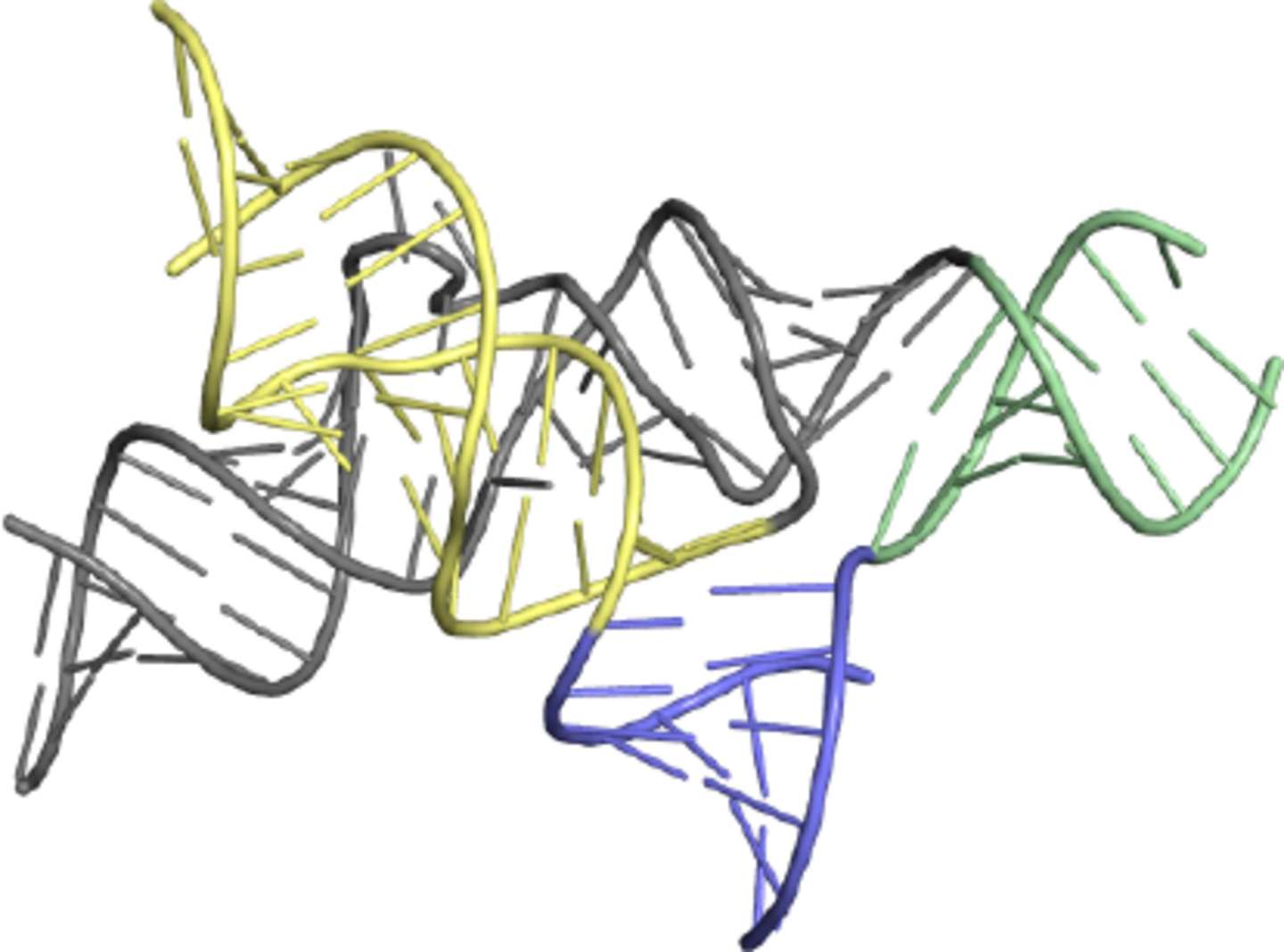
Non coding RNAs are central regulators of cellular processes, yet their molecular mechanisms remain poorly understood. We develop sequence specific labeling strategies based on unnatural base pairs to introduce functional groups into long RNA molecules during in vitro transcription.

This enables site directed incorporation of click handles or spin labels for structural and mechanistic studies. In collaboration with Olav Schiemann at the University of Bonn, we demonstrated the suitability of spin labeled RNAs for EPR based structural analysis. In parallel, we investigate chemically modified mRNA to improve stability and translation efficiency for therapeutic applications.

Selected publication
C. Domnick, F. Eggert, C. Wuebben, L. Bornewasser, G. Hagelueken, O. Schiemann*, S. Kath Schorr*
EPR distance measurements on long non coding RNAs empowered by genetic alphabet expansion transcription
Angewandte Chemie International Edition 2020, 59, 7891 to 7896.


Artificial Nucleic Acids and Unnatural Base Pairs

We design and synthesize novel unnatural base pairs and artificial nucleic acid backbones including Xeno Nucleic Acids. Our approach combines nuclease resistant sugar scaffolds with replication competent unnatural base pairs and introduces halogen bonding as a directional interaction principle for base pairing.

Selected publications
R. Dörrenhaus, P. K. Wagner, L. Wilczek, S. Lüggert, T. A. Behn, M. Breugst*, S. Kath Schorr*
Investigating Halogen Bonds as Pairing Force in an Artificial DNA Base Pair
Journal of the American Chemical Society 2026, Article ASAP
DOI 10.1021/jacs.5c23044

H. Depmeier, S. Kath Schorr*
Expanding the Horizon of the Xeno Nucleic Acid Space: Threose Nucleic Acids with Increased Information Storage
Journal of the American Chemical Society 2024, 146 (11), 7743-7751.
DOI 10.1021/jacs.3c14626


Nucleotide Based Immunostimulatory Signaling Molecules in Plants

Plant diseases pose a major global challenge, requiring sustainable strategies to enhance crop resistance. We synthesize chemically modified nucleotide based immune signaling molecules produced upon pathogen attack in collaboration with Prof. Dr. Jane Parker, MPIPZ.of nucleic acids while maintaining compatibility with transcription, amplification, and reverse transcription.